Top 5 Things You Should Consider When You Remodel Your Basement
Waterproofing Finishing Design Lighting
1. Basement Waterproofing
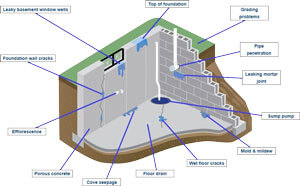
Warning signs that you have waterproofing problems in your basement:
- Mold and Mildew
Fungus that grows in damp and dark areas, and cause discoloration, or musty odors.
- Moldy Odors
This is the result of the decay process from mold, and dry rot.
- Peeling Paint
Peeling paint is a sign that you have moisture problems and waterproofing issues.
- Damp Spots on Walls
Water has absorbed through your walls.
- White Substance on Basement Walls
This is a chemical breakdown of the bonding agent that holds your walls together. This white substance is a sign of possible structural deterioration.
- Cracked Walls
Should be inspected to determine the exact cause.
- Rust on Appliances or Furniture
Like furnaces. Rust is caused by a wet environment and is the sign of waterproofing issues.
- Dry Rot
Black fungus grows mostly on walls or wooden surfaces, causing wood to decay.
Basement Waterproofing Techniques
You can use a waterproofing concrete sealer formulated for new concrete only or that is formulated for water problems or old concrete.
Waterproofing concrete sealer is usually only a two-application process that is simply sprayed onto the concrete with a low-pressure (garden type) pump sprayer. You don't have to be afraid to use it in your home because it is Non-toxic, Non-hazardous and Non-flammable. It has No VOC’s (Volatile Organic Compounds) - No Solvents. It is a water-based, fast drying, penetrating concrete sealer that has no unpleasant odor. Clean-up is with clean tap water.
Waterproofing concrete sealer does a lot more than just waterproof your concrete. It solves potential health problems associated with a damp or wet basement. Migrating moisture creates a breeding ground for mold spores and mildew not to mention that "damp basement odor". It can greatly reduce the health risks associated with the transmission of Cancer Causing Radon. It stops Radon before it enters your home unlike fan systems that allow it in and then vent it back outside.
Whether you are finishing your basement to convert it into usable living space or just using it for storage, applying a concrete waterproofing sealer will make the basement a useable, pleasant, safe and odor free area.
Why is waterproofing important?
A wet cellar can dramatically reduce the value of your home. Studies show that most people won't even consider buying a home with water leakage. Selling a home with water leaks can easily result in as much as a 25% reduction in the sale price.
Even if you rarely have problems with dampness or flooding, it's best to solve the problem completely before doing any remodeling work. Permanent solutions can take time to implement. A good place to start is to talk to an independent home inspector who specializes in waterproofing problems.
Proper insulation is critical to creating a comfortable, dry basement. Besides keeping out the cold, basement insulation prevents condensation. The ground stays cool year round. It in turn keeps basement walls cool. When the warmer air in the room comes in contact with all those cool walls, it has to give up some of its moisture in the form of condensation. In fact, condensation is the primary source of the moisture that causes mold and mildew problems in basements. Effective insulation separates the warm air of the room from the cool walls, thereby preventing the moisture problems that stem from condensation.
About Basement Waterproofing and Insulation:
The Top-10 Most Common Insulating Mistakes in Basements
Perhaps the most fundamental and often overlooked mistake do-it-yourselfers make when insulating is neglecting to find out the most efficient R-value for their area and insulating accordingly. Other common mistakes are listed below:
1. Not providing for good air circulation between the roof and the insulation.
2. Installing fiberglass batting with the paper side (vapor barrier) facing toward the outside instead of toward the heated area.
3. Omitting a vapor barrier, which prevents accumulation of moisture between the batting and the underside of the roof or wall.
4. Puncturing the vapor barrier unnecessarily, or neglecting to puncture the vapor barrier of the top batt when installing two layers.
5. Distorting, compressing, or squeezing the fiberglass batt insulation out of shape.
6. Using paper-faced batting against a heat source like a chimney, a heating duct, etc.
7. Neglecting to get into all of the small spaces and corners with the insulation.
8. Covering eaves vents with insulation, thereby cutting off ventilation.
9. Making unnecessary trips up and down the attic stairs during installation. Assemble all tools and equipment in your work area prior to beginning the job.
10. Not using closed-cell (waterproof), rigid foam insulation panels on below grade installations
Return to Top
2. Basement Finishing Techniques
Finishing a basement is an extremely complicated undertaking and nly a professionally-trained basement finishing contractor has the knowledge and experience to avoid the mistakes commonly made by those less experienced.
Finishing the basement is one of the best way to expand your living space, but ...
Is your basement dry enough?
Only dry basements are good candidates for finishing. A dehumidifier can eliminate minor moisture issue, but other basements have moisture problems that need to be fixed before considering a basement finishing project.
Is your basement warm enough?
It's not a bad idea to have a secondary heat source in your basement, such as a wood burning stove, a fireplace, or a floor warming system.
Walls
When you finish your concrete basement, use the right kind of lumber for the walls. The sole plate (the bottom 2X4 that sits on the floor) should be CCA treated lumber. That way, it won´t be affected by any moisture that could leech up through the concrete floor. The rest of the wall (the upright 2X4´s and the top plate) are standard kiln dried dimension lumber. The top plate is nailed to the joists above. This is no problem where the new wall is perpendicular to the joists, but what about where the wall is parallel to the joists? Cut a 2X4 block to fit between the joists above the wall. The blocks are nailed between the joists every 24 inches. The top plate is nailed to the blocks. Be sure to plumb the walls before nailing. To fasten the sole plate to the concrete floor, run a bead of construction adhesive on the bottom before you stand the wall. Once the wall is plumb, you can drive nails into the concrete with a powder actuated nail set - sometimes called a Ramset. You can rent one from your local rental yard for a few dollars a day. Drive a nail at every other stud space and as close as possible to every door stud.
Furnishings
Use plush carpets and drapes sparingly, if at all. Surfaces that don't absorb moisture are best. Also, be careful about storing clothes, linens and books in a basement. For floors, area rugs are ideal because they can be removed, cleaned and dried. If you must have wall-to-wall carpeting, consider a low pile commercial or indoor/outdoor type.
Floor Covering
— Carpet Pad
If you decide to install carpet on your basement floor, consider spending a little extra on the thickest carpet pad you can get. It helps smooth out the small irregularities in the concrete, especially around the walls and jackposts.
- Padding for laminate floors
When you remove carpet in order to replace it with laminate flooring, it is tempting to use the carpet pad instead of the correct pad for the new floor. Resist the temptation. Carpet pad is too thick and too soft to work correctly. If you do leave the carpet pad, the new floor will be mushy.
Return to Top
3. Basement Design Ideas
A beautifully executed basement remodeling project can give you the perfect space for entertaining, a den for family activities, a game room, and even a top line home theater.
Basements should be more heavily lit than above-grade rooms. Maximize both natural (outdoor daylight) and artificial lighting. An open floor plan, large windows, and a French door leading to the basement instead of the solid door which is most likely installed there now will help maximize the lighting. Also think in terms of light colors, and mirrored walls or ceilings.
Stick with light colors for the walls. Using light paint colors will very effectively brighten the gloomiest basements!
Is your basement warm enough?
It's not a bad idea to have a secondary heat source in your basement, such as a wood burning stove, a fireplace, or a floor warming system.
- Eliminate as many posts and columns as is practical. Design new walls to conceal necessary posts and columns whenever possible.
- If air ducts or plumbing must be relocated, do so along walls or beams, leaving ceilings higher in the center of rooms, where headroom is more critical.
- Make the room seem wider and longer with the use of horizontal design elements.
- Remember that water seeks its lowest point (the basement). Carpet may be installed, of course, but consider using alternative, more water resistant floor coverings such as tiles, vinyl, area rugs (which can be easily taken up and dried out or cleaned), or indoor/outdoor carpeting to minimize any potential water damage.
While your basement may not be much to look at now, you'll want to end up with quality living space when the project is complete. An architect or interior designer can help you get the most out of the space. A little forethought and careful planning now can help you create a space that is attractive, comfortable and useful.
Basement Design with Bright Colors
Seeking out bright or dramatic color schemes should be your goal for your basement decor. Varying shades of red, blue, yellow, orange, and green add color and character to this notoriously dark room. If you already have a couch in your basement, try a bright slipcover to change the look and add coordinating pillows.
Throw down some unique rugs to add texture and variety. Repaint the walls and put up new artwork. If you are in the process of choosing furniture, you might want to consult a decorator to help you create your desired look.
Quick Design Tips
Add or relocate your laundry room to the basement, freeing up main floor space.
Move the gym equipment that's been gathering dust in your garage into the basement.
Return to Top
4. Proper Basement Lighting Techniques
Adding light, whether it is natural or artificial, can make a significant difference in your basement's overall feel. Since basements tend to be dark and gloomy, adding light should be your first step. If part of your basement is above ground, take advantage of this by having as many windows as possible. You should let in natural light wherever possible so look for simple window treatments that allow the most light to pass through.
Make Creative Use of Artificial Light
Typically, basement ceilings are low, so that you get the feeling you're in a cave. To offset this, use indirect lighting that splashes large pools of light on the ceiling. This will open up the space and make rooms appear higher than they are. A mix of this up-lighting and traditional recessed lighting will give you the flexibility you need to create a variety of lighting moods. Mirrors, mounted on the walls or even ceilings, can also amplify and reinforce lighting effects. When natural light isn't an option, artificial light can be used abundantly to create a warm atmosphere. No fluorescent light please! (While fluorescent lighting is very cost effective and energy efficient, it is not the most appealing option speaking in terms of design.) Table and floor lamps work well and some ceiling lighting can be used also.
Maximize Natural Light
For many reasons, you'll want more light. If parts of the basement extend above the ground, you can add new windows or enlarge existing ones. If that isn't possible, another option is to dig window wells. Window wells can increase the odds of water problems, so it's a good idea to build ones with waterproof covers. Another advantage of enlarged windows is that they provide alternative escape routes in case of fire. One concern that some people have about basement windows is that they provide thieves with ideal access to the home. One way to mitigate that risk is to install glass bricks (rather than conventional windows) at high-risk locations. Maximize the effect of regular windows by mounting some windows in the interior walls between rooms that open pathways for natural light to reach interior rooms. Natural lighting in basements via windows is a security problem, since a burglar can break a window. To get natural light without security worries, consider using glass blocks to replace the regular window.
Quick Tip
Use mirrors to reflect light.
Occupancy Sensors
Add energy efficiency and hands-free convenience with occupancy sensors. When you come down the basement stairs with your hands full, these sensors will turn on the lights automatically, keep them on while you are moving around the room and turn the lights off after you leave.
Recessed Lighting
Use recessed lights for basic general lighting where you have room in the ceiling for recessed lighting. Incandescent recessed lights give a brilliant white light and a brighter look in basement areas.
Surface Mounted Spotlights and Directional Lights
Perfect for decorative lighting effects where you don't want to install track lights or recessed lights. Use surface-mounted spotlights and directional lights to highlight pictures and architectural elements. Spot lights and directional lights also provide task lighting in kitchens, home offices, bathrooms and other areas where task lighting is needed.
Track Lights
Incandescent track lights give a brilliant white light. In a basement, they give the space a more finished look.
Quick Basement Lighting Tips
- Turn off the lights in any room you're not using, or consider installing timers, photo cells, or occupancy sensors to reduce the amount of time your lights are on.
- Use task lighting; instead of brightly lighting an entire room, focus the light where you need it. For example, use fluorescent under-cabinet lighting for kitchen sinks and countertops under cabinets.
- Consider three-way lamps; they make it easier to keep lighting levels low when brighter light is not necessary.
- Use 4-foot fluorescent fixtures with reflective backing and electronic ballasts for entire basement.
- Consider using 4-watt mini-fluorescent or electro-luminescent night lights. Both lights are much more efficient than their incandescent counterparts. The luminescent lights are cool to the touch.
- Recessed lighting in basements creates a more open atmosphere than surface fixtures and are less likely to be broken by child play.
- Use shallow housings for basements where vertical installation space is limited such as 2" x 6" construction.
- A-lamp multipliers provide a more diffuse, uniform lighting.
- Narrow beam lamps create more dramatic effects on objects and artwork.
Return to Top
|